
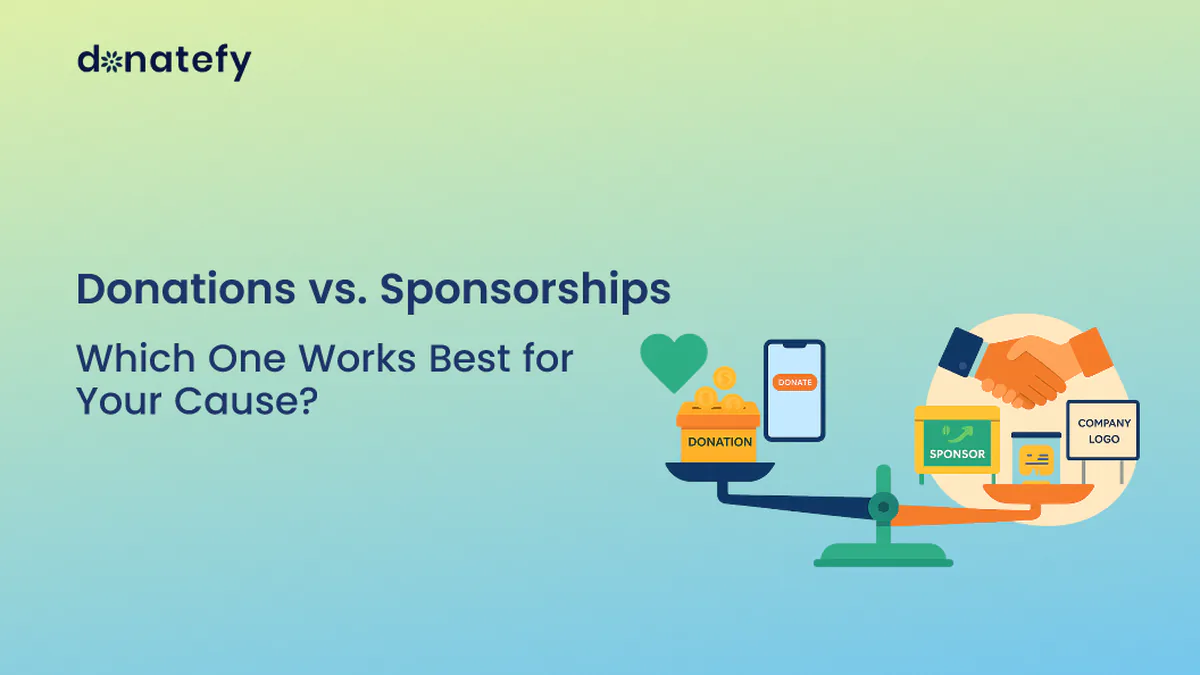
For nonprofits, schools, and community organizations, fundraising well is never simple. Among the many revenue streams available, donations and sponsorships are two of the most common, and two of the most often confused. Both bring in money, but they differ in motivation, sustainability, and strategic value.
Understanding those differences helps leaders build a fundraising strategy that holds up in good years and lean ones. Here is how each works, what each asks of you, and how to combine them.
Donations: mission-driven giving
At their core, donations are acts of generosity. They come from individuals, and sometimes institutions, who believe in your mission and want it to succeed, usually without expecting anything tangible in return.
- Why donors give. Empathy, shared values, and a desire to make a difference. Stories and a personal connection to the cause usually matter more to them than any incentive.
- The nature of the support. Donations, and recurring gifts in particular, can provide predictable, often unrestricted revenue that covers operating costs, funds growth, or answers an emergency.
- The strategic value. A broad donor base builds financial resilience. Over time, even small individual gifts add up to a sustainable revenue stream.
Donations depend on relationships. Keeping donors takes consistent engagement, transparent reporting on impact, and a sense of belonging. Without that care, donors drift away. Recurring giving helps, because a donor who gives monthly stays connected between appeals. Our guide to building a monthly giving program covers how to grow one.
Sponsorships: partnerships with purpose
Sponsorships work differently. They are a partnership by design: a company contributes money or in-kind support in exchange for visibility, access to your audience, or a public association with your cause.
- Why sponsors give. Businesses look for a return, whether that means brand exposure, corporate social responsibility goals, or deeper ties to the community.
- The nature of the support. Sponsorships often bring larger single contributions than individual gifts, which makes them a strong fit for events, campaigns, and capital projects.
- The strategic value. A well-structured sponsorship can lend your organization credibility and visibility by connecting your mission with an established brand.
Sponsorships come with obligations. Unlike donors, sponsors expect deliverables: logo placement, recognition at events, media mentions, and measurable results. Missing those commitments can damage the relationship and your reputation, so agree on them in writing before the campaign starts.
Key considerations: which path to prioritize?
When you decide where to put your effort, weigh four factors.
Sustainability or scale
- Donations provide long-term, renewable revenue.
- Sponsorships offer scale, often as larger sums, but usually for a shorter term.
Mission alignment
- Donations grow from shared values and emotional commitment.
- Sponsorships depend on aligning your mission with a company's objectives.
How you describe your organization shapes which sponsors fit. If you are unsure which label applies to you, our guide to nonprofit vs NGO explains the differences in scope, funding, and mission.
Control and flexibility
- Donated funds are often unrestricted, so you can direct them where the need is greatest.
- Sponsorships may come with conditions that limit how you use the money.
Relationship dynamics
- Donor relationships are built on storytelling and trust.
- Sponsorships involve negotiation, contracts, and agreed measures of success.
The balanced approach: why you need both
The strongest organizations do not choose between donations and sponsorships. They use both, each for what it does best.
- Donations anchor your mission with community support and financial stability.
- Sponsorships bring in capital for specific initiatives and widen your reach through business partners.
Think of donations as the steady heartbeat of your organization, and sponsorships as the boost that moves a specific initiative forward. A mix of both spreads your risk, strengthens your resilience, and keeps you from relying too heavily on any single source of funding.
Running donations and sponsorships side by side
A blended strategy is easier to manage when every gift lands in one place. With Donatefy, each appeal is its own campaign in the Campaign Builder, with its own amounts, donor fields, and receipt settings.
- Keep general giving always on. Your general fund can run year-round on your giving site, kiosks, and other devices, with one-time and monthly options for donors.
- Give each sponsored initiative its own page. A standalone campaign page with its own link suits a sponsored event or project, and it is easy to share in partner announcements.
- Report back with real results. Campaign reporting shows totals, trends, and channel breakdowns for each campaign, which gives you concrete outcomes to share with a sponsor.
- See every supporter clearly. Each donor's giving across every campaign and channel lives in one donor record.
Sponsorship payments and donations can be treated differently for tax purposes, so confirm with your accountant how each should be acknowledged and recorded.
Final thoughts
There is no universal answer to whether donations or sponsorships work best. The better question is how your organization can structure both so they strengthen each other.
By building donor loyalty and choosing sponsors whose goals match your mission, you create a diverse funding base: one that sustains your work over the long term while it funds ambitious campaigns in the short term.